Gas Engine Oils
Advanced performance gasoline engine oils for passenger cars, light trucks and SUVs. All grades meet API SP and, where the viscosity qualifies, ILSAC GF-6.
Endura Series
Endura is our gasoline engine oil series: a tightly focused range of API SP grades covering the viscosities that account for the overwhelming majority of North American passenger car service. Every grade uses an innovative additive system built for direct injection, turbocharging and low-speed pre-ignition (LSPI) protection.
• Full Synthetic
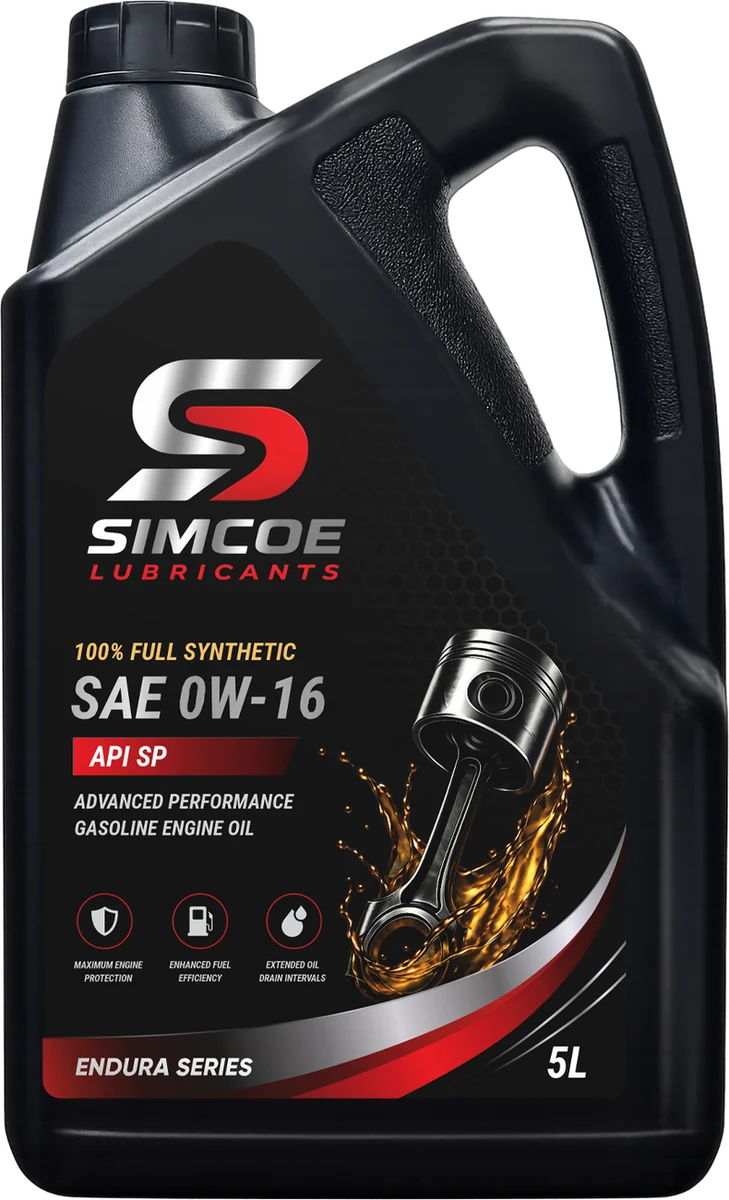
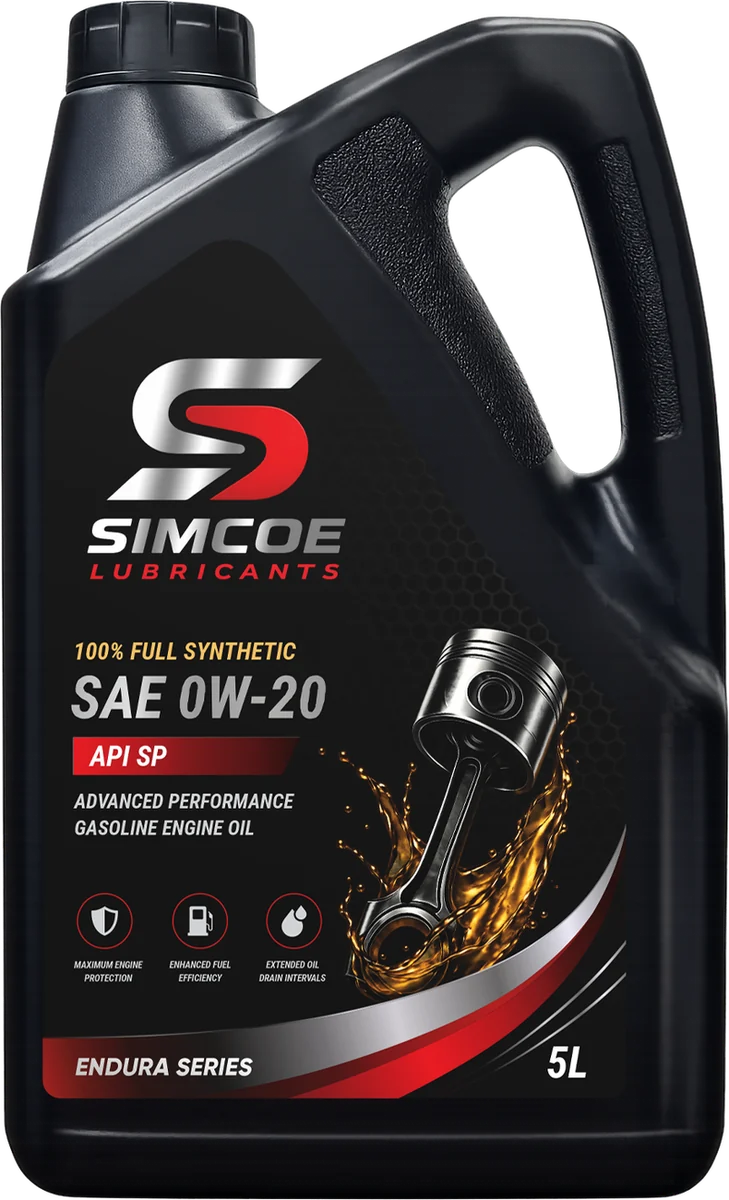
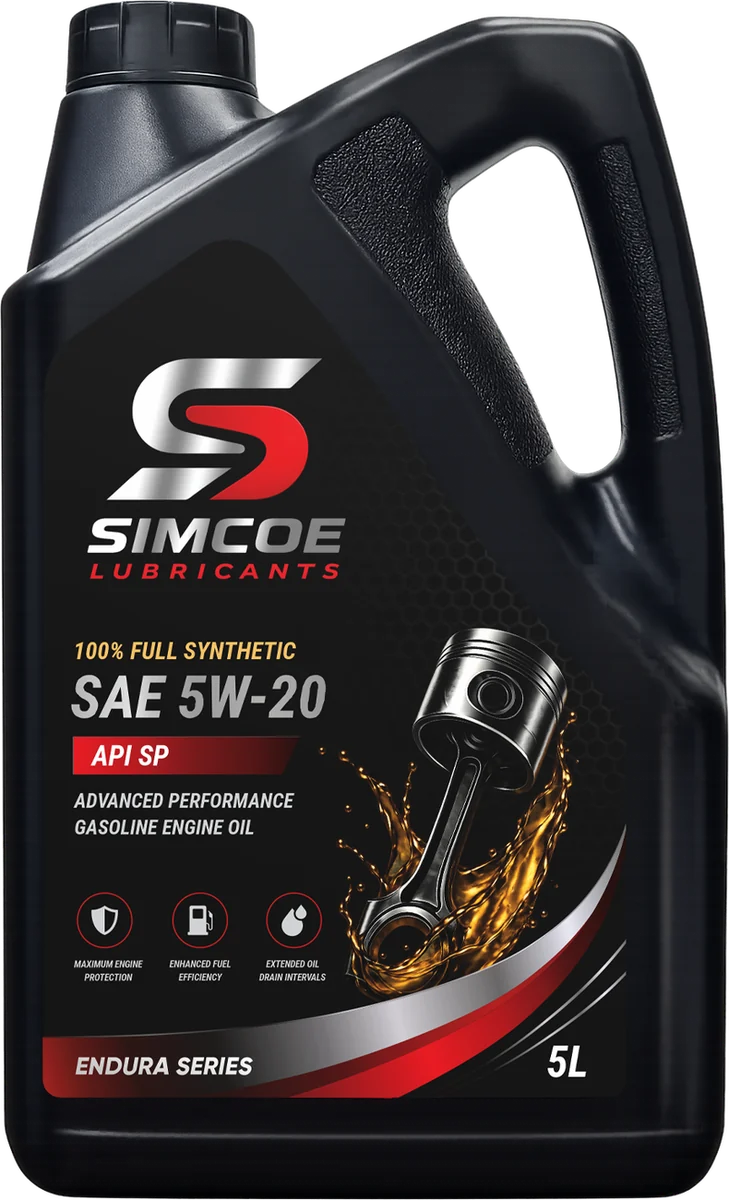
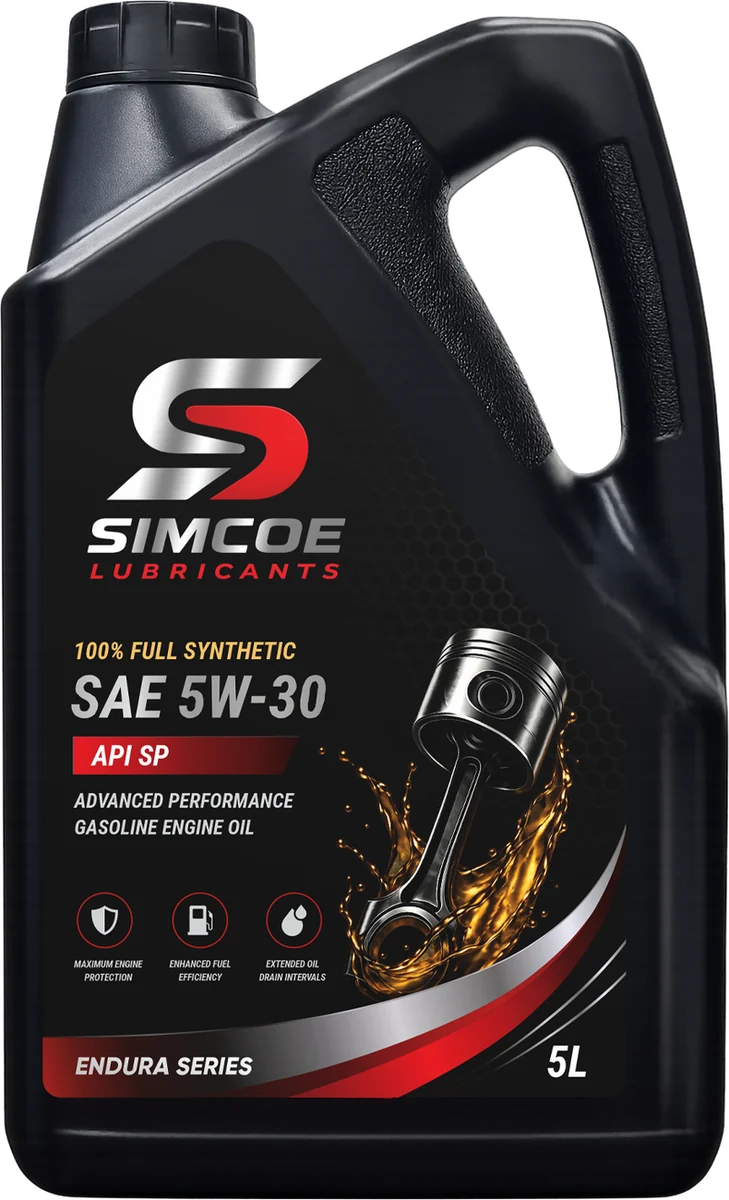
• Semi Synthetic


Choosing a Grade
Always follow the viscosity grade printed in the vehicle owner's manual or on the oil filler cap. Where the manufacturer permits more than one grade, the lighter grade generally favours fuel economy and cold-start protection, and the heavier grade favours film strength under sustained high load and high ambient temperature.
| Grade | Oil Type | Service Category | Part No. | Detail |
|---|---|---|---|---|
| SAE 0W-16 | Full Synthetic | API SP · ILSAC GF-6B | 26016 | View → |
| SAE 0W-20 | Full Synthetic | API SP · ILSAC GF-6A | 26020 | View → |
| SAE 5W-20 | Full Synthetic | API SP · ILSAC GF-6A | 26520 | View → |
| SAE 5W-30 | Full Synthetic | API SP · ILSAC GF-6A | 26530 | View → |
| SAE 5W-20 | Semi Synthetic | API SP · ILSAC GF-6A | TBC | View → |
| SAE 5W-30 | Semi Synthetic | API SP · ILSAC GF-6A | TBC | View → |
ILSAC GF-6A and GF-6B Are Not Interchangeable
Both appear in this range and the difference matters more than the single letter suggests.
ILSAC GF-6A is the backward-compatible half of the standard. A GF-6A oil can be used where an earlier ILSAC category was specified, provided the viscosity grade is right. Our SAE 0W-20, 5W-20 and 5W-30 grades are GF-6A.
ILSAC GF-6B exists solely for SAE 0W-16 and it is not backward compatible. It carries its own certification mark for exactly that reason: 0W-16 is thinner than anything the older categories covered, and it belongs only in engines whose manufacturer explicitly calls for it, typically late-model hybrid and Atkinson-cycle designs built around that viscosity. Putting 0W-16 into an engine specified for 0W-20 or heavier is not a fuel-economy upgrade; it is running the engine on a film thinner than it was designed for.
Built for Direct Injection and Turbocharging
The hardware the range is aimed at is the reason the additive system looks the way it does.
Gasoline direct injection sprays fuel straight into the cylinder rather than the intake port. It is efficient, and it puts two new loads on the oil: fuel dilution, as unburnt fuel washes past the rings into the sump and thins the oil, and soot, which a port-injected engine produces far less of.
Downsized turbocharged engines add heat. The turbo bearing runs hot enough to coke oil that is not stable enough to sit in it, and coked oil in a bearing feed is how turbochargers fail. Oxidation stability is not a specification-sheet nicety on this hardware.
Low-speed pre-ignition is the third and the most destructive. Under high load at low engine speed, a turbocharged direct-injection engine can ignite its charge before the spark, with peak pressures high enough to break a piston or a rod in one event. Oil chemistry is part of what triggers it, which is why API SP and ILSAC GF-6 both include an LSPI test. Every grade in this range is formulated against it.